Oops!
If you're seeing this, you'll need to:
Click Here to Refresh
or swipe down to refresh...
Still not working?
Check your Internet connection or restart your phone
Need more help?
Email us at
support@hipcomic.com
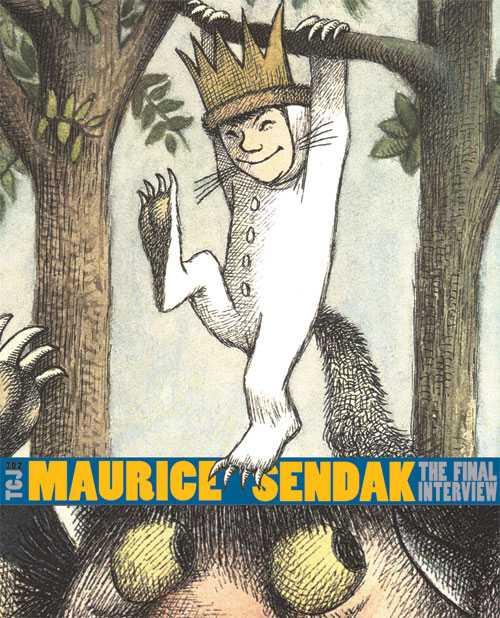
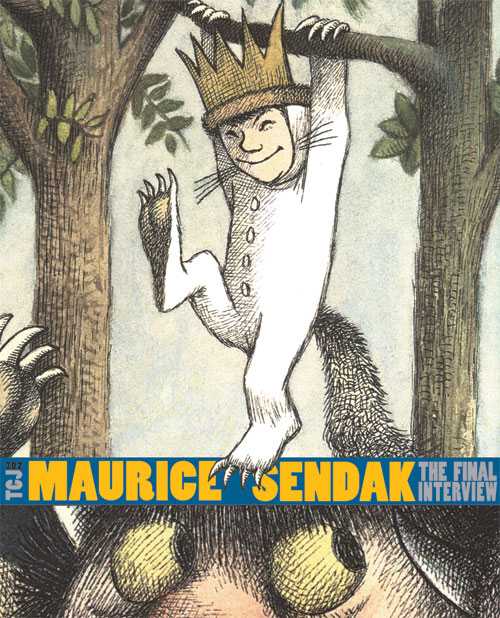
The Comics Journal #302
Cover Date: February, 2013
The newly formatted, 600+ page Comics Journal proved a resounding success with 2011’s edition. 2012’s Volume 302 is sure to prove just as essential and exciting to comics readers worldwide. This edition’s cover feature is a long, intimate interview ...
Issue Description
The newly formatted, 600+ page Comics Journal proved a resounding success with 2011’s edition. 2012’s Volume 302 is sure to prove just as essential and exciting to comics readers worldwide.
This edition’s cover feature is a long, intimate interview-portrait with and of Maurice Sendak, the greatest and most successful children’s book author of the 20th — and 21st — century, the author of Where the Wild Things Are, In the Night Kitchen, Outside Over There, Higglety Piggelty Pop, and the illustrator of works by Herman Melville, Leo Tolstoy, and Randall Jarrell. In his longest published interview (and one of the last before his death in 2012), Sendak looks back over a career spanning over 60 years and talks to Gary Groth about art, life, and death (especially death), how his childhood, his parents, and his siblings affected his art and outlook, his search for meaning — and also, on the lighter side, about his love (and hate) of movies. And his unbridled comments on the political leadership of the previous decade have already garnered national media attention and controversy.
Sharing equal billing in this issue's flip-book format: Kim Thompson conducts a career-spanning interview with French graphic novel pioneer Jacques Tardi. The two explore the Eisner Award-winner’s genre-spanning oeuvre comprising historical fiction, action-adventure, crime-thriller, “icepunk” and more, focusing on Tardi's working methods (with step by step illustration), collaborations and other media (such as film and animation), and his fascination with World War I. Plus, Matthias Wivel examines Tardi's adaptation of Léo Malet's 120, Rue de la Gare.
Also in this issue, Art Spiegelman conducts a wide-ranging aesthetic colloquy on classic kids’ comics (Carl Barks’s Donald Duck, John Stanley’s Little Lulu, Sheldon Mayer’s Sugar and Spike, and many more) with a group of comics critics and historians. Bob Levin provides a revelatory investigation of the twisted history of the "Keep on Truckin’" litigation and a fascinating biographical portrait of R. Crumb’s lawyer, Albert Morse. Warren Bernard writes a ground-breaking historical investigation of the 1954 Senate Subcommittee Hearing on Juvenile Delinquency. R.C. Harvey looks at Bill Hume's Babysan and Donald Phelps examines Percy Crosby's Skippy. And a tribute to the late Dylan Williams from his peers and the artists he published.
Plus: “How to Draw Buz Sawyer” by renowned newspaper cartoonist Roy Crane (and a previously unpublished interview), a new comic by Joe Sacco and one by Lewis Trondheim in English for the first time, Tim Kreider on Chester Brown, Tom Crippen on Mort Weisinger and Superman, Rich Kreiner on "difficult comics," and a visual gallery of and commentary on proto-comics.
The Comics Journal has been for 37 years the world’s foremost critical magazine about comics. It is now more vital than ever, a gigantic print compendium of critiques, interviews, and comics.
The Comics Journal (1976)
- Publisher
- Fantagraphics
Volume Description
The Comics Journal is a magazine that covers the comics medium from an arts-first perspective, and one of the nation's most respected single-arts magazines, providing its readers with an eclectic mix of industry news, commentary, professional interviews, classic comics sections and reviews of current work on a regular basis. Due to its reputation as the American magazine with an interest in comics as an art form, the Journal has subscribers worldwide, and in this country serves as an important window into the world of comics for several general arts and news magazines.
Despite a contentious relationship with the rest of the North American comics industry, due in no small part to its investigative news stories and uncompromising review section, the Journal has won several industry awards, most notably the Utne Reader, Eisner and Harvey trophies.
In October 2009, we announced the next phase of the evolution of The Comics Journal, beginning in 2010 as a uniquely sized and formatted, evocatively visual and tactile semi-annual event, with expanded content at The Comics Journal website TCJ.com.
A comics magazine, which originally began as the New Nostalgia Journal, started in 1976 by Gary Groth and Mike Catron after the Nostalgia Journal (which ran 26 issues) lost their battle against the competing adzine, The Buyer's Guide. Gary and Mike, both in their twenties, had no plan, but somehow convinced the maker of the Nostalgia Journal to give them the paper.
As Gary Groth recalls:
I can’t remember how we talked them into this, but I suspect they were on their last legs and decided to hell with it, let’s give it to these two kids. Shortly thereafter, a box arrived in the mail with some back issues, a list of advertisers and a mailing list, and we were the proud new owners of Journal.
Please first Sign In before leaving a review.